
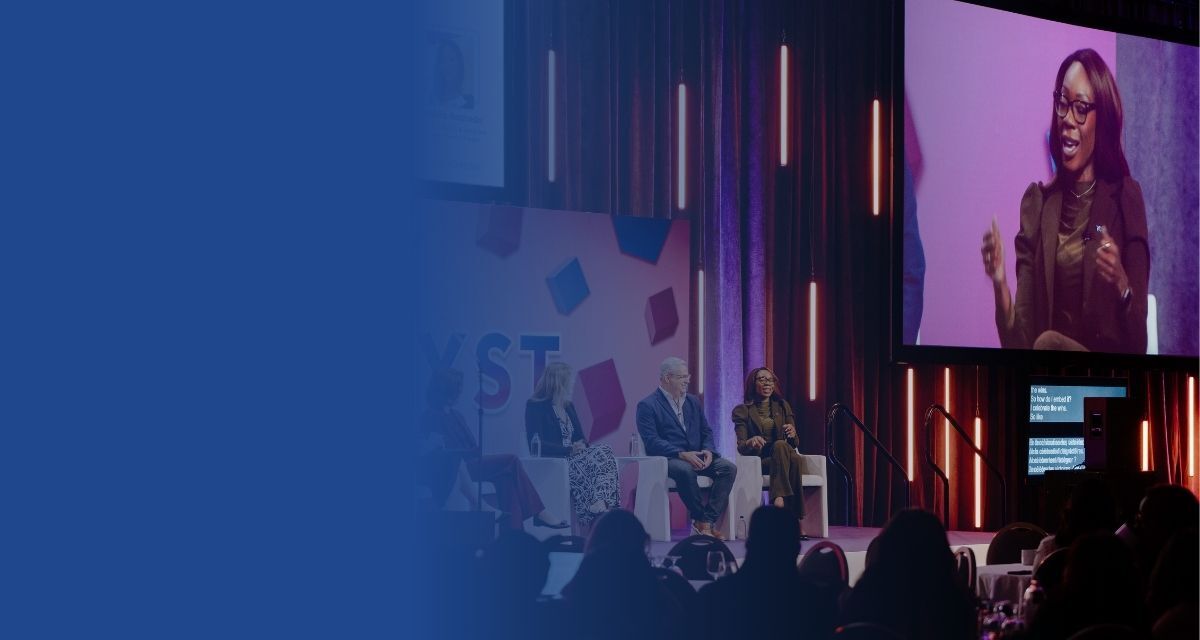
| (Above) Award winners onstage at the 2025 Catalyst Honours conference in Toronto. |
Leadership behaviors that scale systemic change
When extended intentionally, trust doesn’t stop with the person who receives it. It moves across teams, geographies, power structures, and customer experiences: it becomes a system.
Each year, Catalyst awards inspirational business Champions who make inclusion a successful business practice. Across the nine Canadians we recognized in 2025, a clear pattern emerges: trust is transitive.
Leaders who can activate and circulate trust through their companies are the ones capable of creating winning cultures that endure (and win awards). When we asked the 2025 Champions how this was possible, they broke it down for us into nine interconnected actions.

1. See skills, not title
Angeline Pleunis had spent most of her career as an executive assistant, but her interests stretched beyond. When working at a grocery retailer, she told her CFO she wanted to do more.
“What made [my CFO] remarkable was his active listening. He didn’t make assumptions about people or their titles,” said Pleunis.
Her boss told her there was a unique opportunity: the national head office didn’t have a private‑label test kitchen. And he knew she had the skills to help build one.
Accepting the assignment shifted Pleunis’ posture as a leader. Since somebody placed confidence in her, she began asking what was possible, diagnosing needs, and engaging across functions with the belief that she could figure it out, come what may, and extend that trust to others.
2. Take a trust‑first posture
When Christina Boim pivoted from a primarily engineering role into managing a critical venture relationship, trust became paramount to business success.
“Every word I said in a meeting, every email, every interaction—what was shared or not shared—flowed through my position,” Boim said.
Since her company held a 50/50 working interest in this joint venture asset, mistrust would have been expensive, with the risks of miscommunication amplified. Instead, Boim emphasized the importance of a trust‑first posture.
“If you enter a situation with a trust‑first mindset instead of a distrust‑first one, it makes a big difference in how you build relationships and establish alignment.”
By assuming positive intent from the co-owner, communicating openly, and looking for shared priorities rather than points of leverage, joint trust acts as a collaborative multiplier.
3. Scale trust through “glocalization”
In a senior role at a large North American bank, Vanessa Lewerentz balances global values within a wide range of conditions.
She often uses the portmanteau “glocalization” to describe her philosophy: anchoring decisions in a consistent set of global principles while empowering regions to tailor practices to local realities.
“Our principles are global, but their application must be local,” Lewerentz said. “We anchor everything in our purpose and values, while recognizing that practices may look slightly different depending on the region.”
This approach enables teams across multiple geographies to trust that the organization’s commitments are real and aligned with their values and business strategy.
4. Embed accountability into governance
Sonja Volpe embeds trust structurally through leader‑led inclusion accountability: objectives for the extended Canada leadership team, direct reporting lines into the CEO, and workforce planning strategies that make inclusion non‑negotiable.
“The most successful organizations embed inclusion into all aspects of their activities,” she said, “From leadership and governance to services, operations, employee engagement, and benefits, thereby strengthening trust at all levels.”
When trust is codified into operational rhythms—not just culture statements—it endures leadership transitions, economic cycles, and external political shifts, transforming trust from an interpersonal experience into infrastructure that holds the system steady.
From Volpe's point of view, when team members understand how their work aligns with organization-wide strategy, they feel valued, engaged, empowered, and ultimately, trusted. This brings an overall sense of purpose to day-to-day tasks and inspires a deeper investment in the work.
5. Use storytelling to create safety
According to Naz Zehra, trust cannot be established where people feel unsafe.
As an example, she talks openly about her personal experience with postpartum depression, a topic that is often kept secret and stigmatized.
“Storytelling creates psychological safety… If I can sit there and be vulnerable in front of thirty or one hundred people, then others feel they can do the same. It sends the message that it’s okay to bring your whole self to work.”
When leaders name what is difficult, they lower the emotional cost of honesty. Teams begin raising issues earlier, solving problems faster, and supporting each other more deeply.
“And why does it work? Because it strips away the corporate veneer and makes things real. Suddenly, you’re not looking at someone as a “perfect leader” who has it all together. You see them as a person,” she said.
6. Empower your team
Instead of answering every question sent her way, Molara Awosedo often redirects inquiries to subject‑matter experts on her team. Over time, people stop defaulting to hierarchy and start going directly to the right person.
“Sometimes it really is hard for leaders to relinquish control,” she said. “They don’t always know how to step back. But the impact when they do is huge.”
By delegating to her direct-reports, Awosedo does two powerful things:
First, she builds team confidence by making expertise visible.
Second, she frees herself to lead at the level of her role rather than serving as a bottleneck.
“I work hard to close the gap between myself and my team—to make sure they’re getting the same exposure, the same insights, and the same opportunities I’m getting,” Awosedo said. “If I’m growing, they’re growing. That’s how I lead, and that’s how trust takes root.”
7. Resolve conflicts with safety circles
Marie‑Huguette Cormier believes that while today’s workplace is more complex than it was twenty years ago, this complexity can be a catalyst for greater trust between generations, genders, and different organizational roles.
To navigate these tensions, Cormier offers a structure called le cercle de confiance, or a “Safety circle”: a manager‑facilitated inclusive dialogue space co-constructed with the team.
Safety circles pause day‑to‑day work to surface misunderstandings, unspoken tensions, and emotional undercurrents—within clear participation norms that ensure psychological safety and equal voice.
For Cormier, the manager’s role is essential. They are responsible for framing the agreement, guiding open, non‑judgmental dialogue, and closing with concrete next steps.
“The real game‑changer is whether managers can handle difficult conversations with a simple, clear methodology,” she said. “They just need to create the space. That’s how we build and maintain trust in the workplace.”
8. Own up to mistakes, publicly
Jay Brewster thinks leaders need to be more comfortable with being uncomfortable. Leaning into accountability, he thinks this requires a willingness to learn publicly.
“Learning publicly means you’re going to make mistakes,” Brewster said. “And how you handle those mistakes, how you model doing the right thing and moving forward, is incredibly impactful.”
In environments where leaders hide mistakes, teams become risk‑averse and innovation stalls. But when leaders acknowledge what they learned in public settings such as meetings and take accountability for how they will adjust future behavior, they signal that the organization values growth over perfection.
“I make mistakes all the time in this work. What matters is how you approach them, how you learn from them, and how you get better.”
9. Use policy to put values into practice
Trust becomes fully systemic when it shows up in policy choices that shape employees’ lived experience at a company.
For Janice Farrell Jones, that has meant championing programs that expand access and opportunity in the financial industry; developing long‑standing initiatives that build financial and leadership readiness for mid‑career talent and strengthening pathways for underrepresented groups.
These efforts aren’t branding exercises, they're commitments people can feel directly in their careers.
“A culture of inclusion is core to business strategy, and my job is to make that real—from top‑talent conversations to everyday team culture,” she said.
Regardless of the exact policies, it’s essential to define how your organization “shows up” for its values and how it puts them into practical reality. Trust requires proof; when employees experience policies that reflect shared values, credibility increases. When policies contradict values, trust is put into question.
How trust becomes a system
In today’s fractured environment, organizations can no longer rely on positional authority or corporate statements to carry trust. People follow what leaders demonstrate, encode, and repeat.
Trust is not mysterious. It is designed, distributed, reinforced, and scaled—one action at a time.
When leaders understand how trust moves, they can shape their organizational culture intentionally. And when they do, the benefits are profound: stronger teams, faster alignment, deeper innovation, and workplaces where people feel seen, valued, and safe to lead.
Dive deeper
-
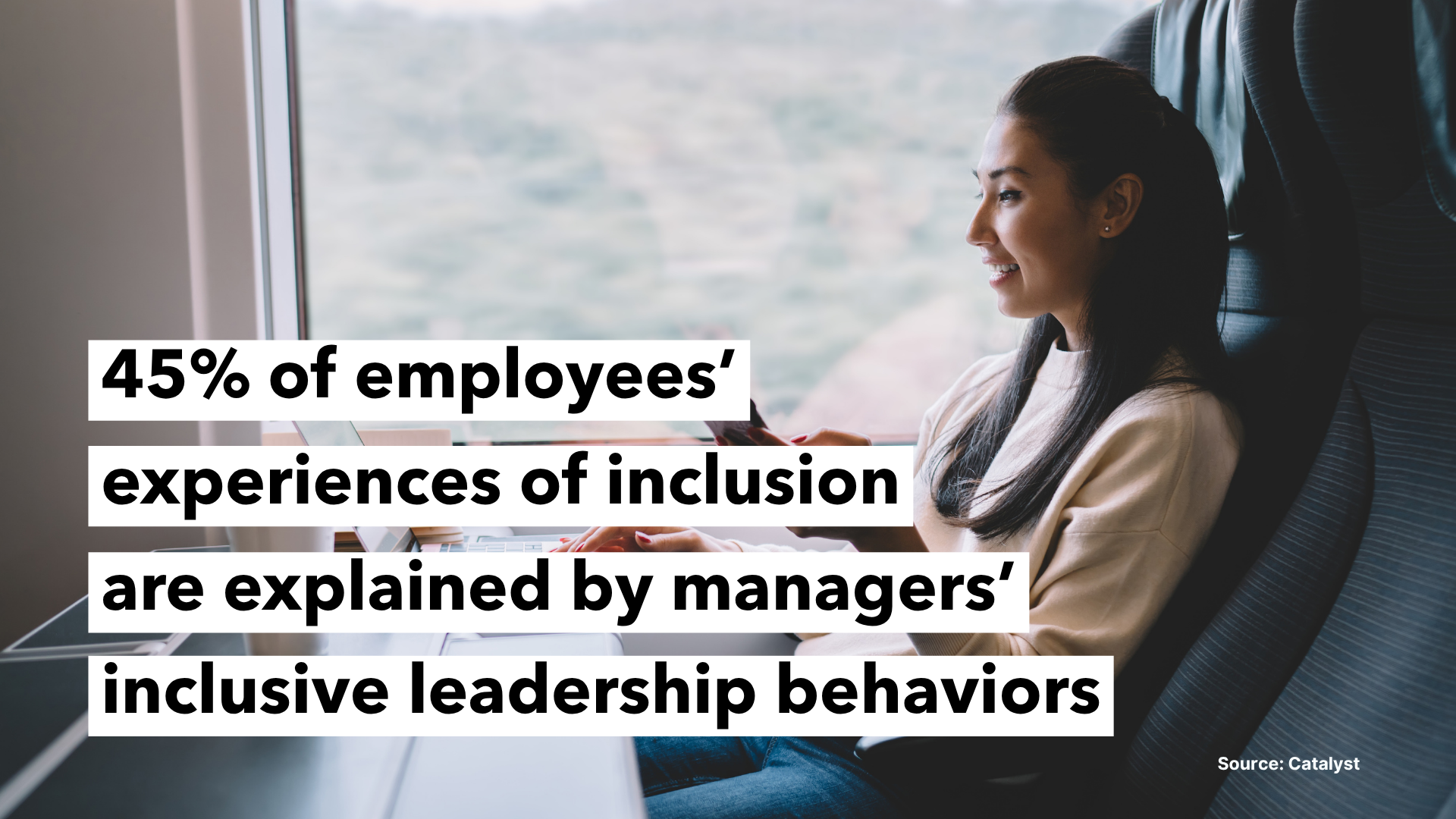
Travis, D. J., Shaffer, E., & Thorpe-Moscon, J. (2019). Getting real about inclusive leadership: Why change starts with you. Catalyst.





.png)